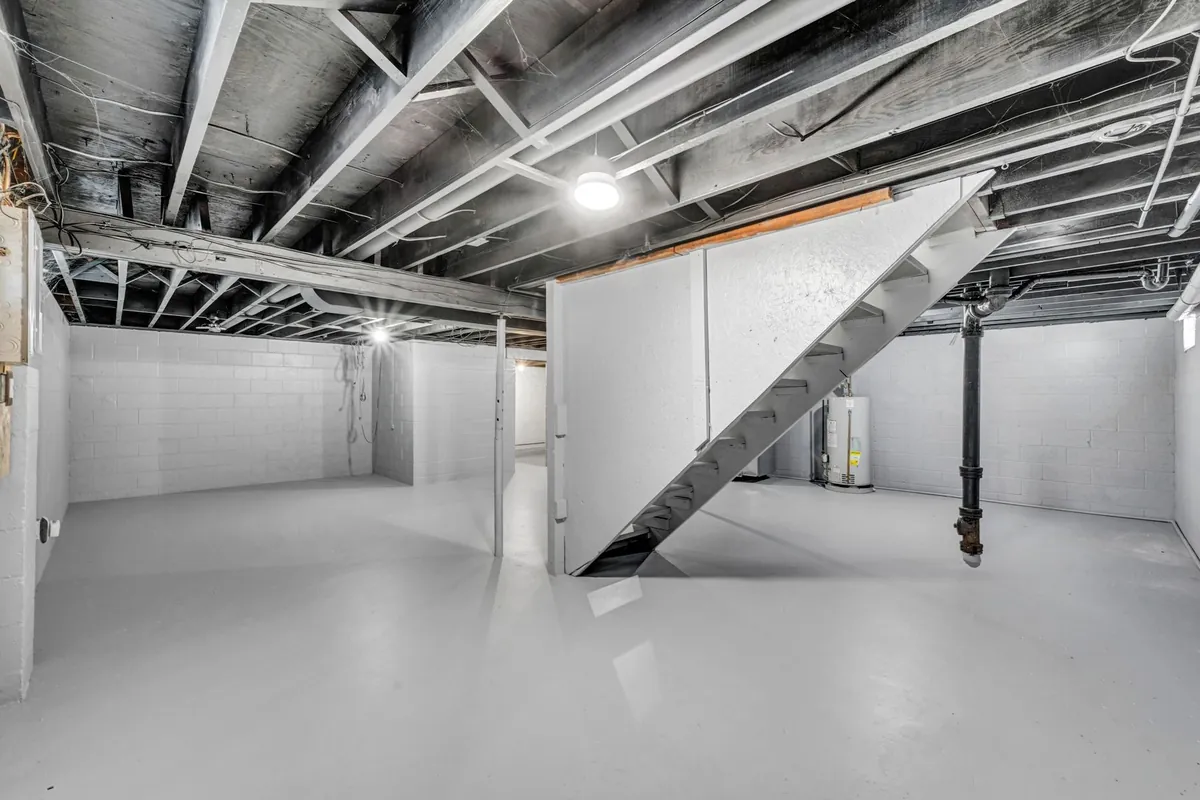
If your basement has flooded in Troy or Tipp City, the cleanup comes in two parts: getting the cause stopped, which may mean a call to the city if a water main or sewer main is involved, and getting the basement dried before mold starts, which is a job for a restoration company. Both cities run their own water and sewer departments, and both put the private part of the pipes on the property owner. Here is who to call, what each city says about responsibility, and the cleanup steps that matter most in the first two days.
Where is the water coming from?
The source decides who you call first and, often, who pays.
| What you see | Likely source | First call |
|---|---|---|
| Dirty water rising from the floor drain, often when fixtures are used | Sewer backup in the lateral or the main | City sewer department, then a plumber if the problem is private |
| Clear water coming in fast, water in the street or yard | Water main or service line break | City water department |
| Water around the sump pit after heavy rain | Sump pump failure or power outage | Plumber, then a cleanup provider |
| Water along the base of the walls during rain | Surface water, downspouts, foundation seepage | Cleanup provider; check your gutters and grading later |
Troy: who to call and what the city does
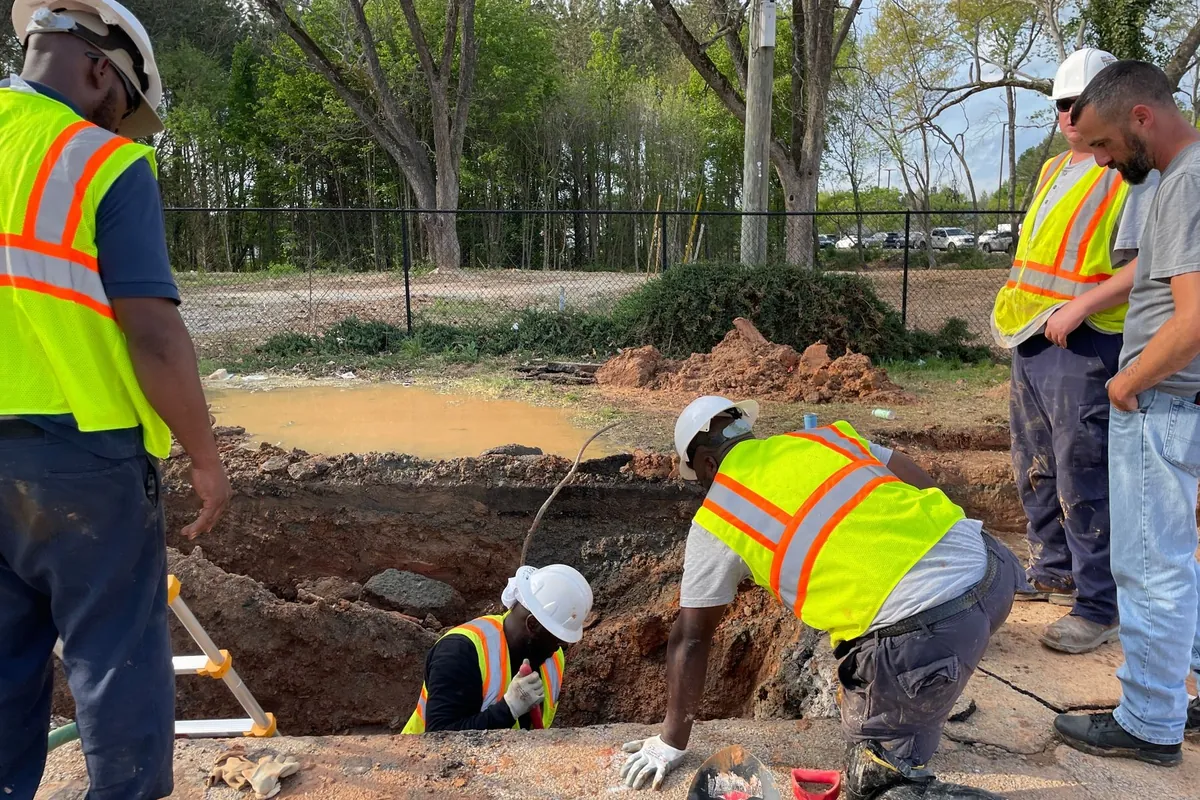
The City of Troy’s Water Distribution crews respond to reported main breaks; the city says the staff responds “in all types of weather and at all times of the day” (City of Troy, Water Distribution). To report an infrastructure problem, the city lists its Central Service and Maintenance Facility at 937-335-1914, and the City’s main line is 937-335-1725 (City of Troy, Engineering). The pages we read do not list a separate after-hours number, so if water is pouring into the street at night, call the city and, if there is any danger, 911.
Tipp City: the owner’s side of the pipes
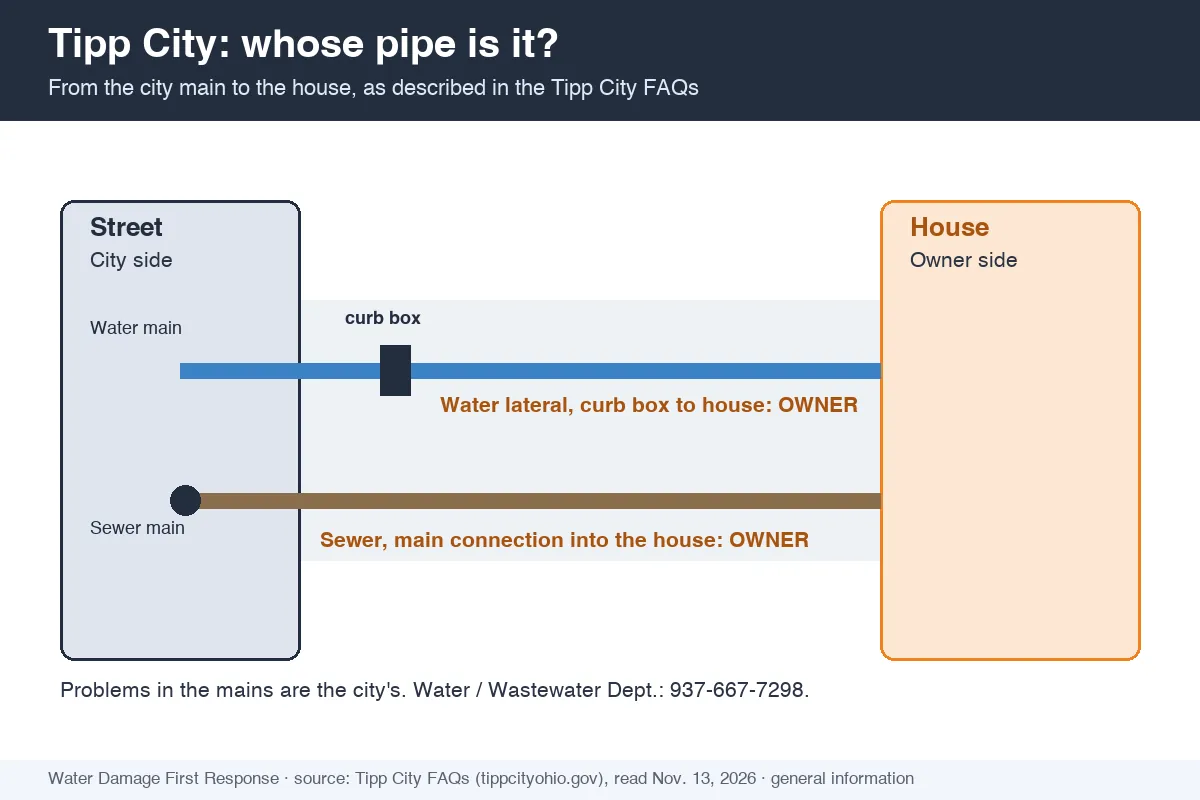
Tipp City’s FAQs spell out where the city’s responsibility ends (Tipp City, FAQs):
- “The property owner is responsible for repairs to the sewer from its connection to the main into the house.”
- “The property owner is responsible for water lateral repairs from the curb box to the house.”
The Water / Wastewater Department is at 937-667-7298 (Tipp City, Water / Wastewater). If the problem turns out to be in the main, the city handles it; if it is in your lateral, you hire the plumber.
Cleaning up a flooded basement: the first 48 hours
- Make it safe. Do not step into standing water that reaches outlets, cords, the furnace or the water heater. Shut off power to the basement from a dry spot or have an electrician do it.
- Stop the source if you can: close the main water valve for a supply leak, stop using sinks and toilets during a sewer backup.
- Photograph everything before you move or throw anything out, including the water line on the walls and the floor drain.
- Get the water out. Pumps and wet vacuums for standing water; carpet and pad usually need extraction or removal.
- Remove what cannot be dried. Soaked carpet pad, the lower part of drywall, insulation, cardboard. Materials touched by sewage need more care than those wet with clean water.
- Dry it fast. The EPA says to dry water-damaged areas and items within 24-48 hours to prevent mold growth (EPA, A Brief Guide to Mold, Moisture and Your Home). In a cool basement that usually takes dehumidifiers and air movers.
Our guides to basement flooding cleanup in Ohio, sewage backup cleanup and water mitigation in Ohio go into each step.
Basement still wet in Troy, Tipp City, Piqua or elsewhere in Miami County? Call (844) 434-2077 to check which participating cleanup and drying providers serve your address. A partner call service answers; we may be paid when you call.
Sump pumps and power outages
Many basements in the Miami Valley depend on a sump pump to keep groundwater out after heavy rain. When the pump fails or the power goes out during a storm, water can rise in the pit and spread across the floor within hours. If that happens:
- Do not reach into the pit or handle the pump while it is plugged in and standing in water.
- Once power is safely off, check whether the float is stuck, the discharge line is frozen or blocked, or the pump simply stopped.
- Photograph the pump and the water level before anyone replaces it; the cause matters for insurance.
A plumber replaces or repairs the pump. The water already on the floor is the cleanup provider’s job.
What to tell the cleanup provider when you call
- Where the water came from (floor drain, sump pit, wall, window well) and whether it smelled of sewage.
- How deep it got and how long it has been standing.
- Whether the basement is finished: carpet, drywall, paneling, ceiling tiles.
- Whether the source has been stopped and whether the power is off.
- Whether you have already reported the loss to your insurer.
Those answers decide what equipment comes on the first visit and how fast drying can start.
Insurance: which policy responds
A flooded basement can fall under different coverages. Federal flood insurance defines a flood as a general and temporary condition of partial or complete inundation of two or more acres of normally dry land or of two or more properties (FEMA, NFIP Terminology Index), and FEMA’s FloodSmart site notes that flood insurance would not cover a sewer or drain backup unless a flood caused it. Sewer and drain backup is often an endorsement on a homeowners policy, so check your declarations page and call your agent. Our page does insurance cover water damage in Ohio? and the guide to filing a water damage claim in Ohio explain the process.
Nearby areas
For the rest of the Miami Valley, see our pages on Dayton water damage restoration and Springfield water damage restoration.
Frequently asked questions
Who is responsible for a sewer backup in Tipp City?
Tipp City says the property owner is responsible for the sewer from its connection to the main into the house. Problems in the main are the city’s.
Who do I call about a water main break in Troy?
The City of Troy, whose Water Distribution crews respond to breaks at all times of day. The city lists 937-335-1914 for infrastructure problems and 937-335-1725 as its main line.
How fast should a flooded basement be dried?
The EPA says within 24-48 hours to prevent mold growth.
Can I clean up a flooded basement myself?
Small amounts of clean water, yes, if you can dry everything within that window. Sewage, large volumes, or water in finished walls and carpet are better handled by a restoration provider with drying equipment and moisture meters.
Does homeowners insurance cover a flooded basement?
It depends on the cause and your policy. Flood needs a flood policy; sewer backup usually needs an endorsement.
Sources consulted November 13, 2026: City of Troy, Water Distribution and Engineering (troyohio.gov); Tipp City, FAQs and Water / Wastewater (tippcityohio.gov); FEMA, NFIP Terminology Index and FloodSmart; U.S. EPA, A Brief Guide to Mold, Moisture and Your Home (updated February 18, 2026). City contacts change; confirm with your city. General information, not legal or insurance advice.
Talking to a cleanup provider
waterdamagefirstresponse.com does not perform restoration or plumbing work and does not employ technicians. If you are dealing with a flooded basement or a sewage backup in an Ohio home, call (844) 434-2077: a partner call service checks whether a participating provider serves your area. You decide whether to move forward with anyone you speak to.